

All dollar figures are Canadian unless marked US.
Koru Homes spends about $500 a month on Google Ads. Our monthly report says each "conversion" costs $17. The real numbers look different: about $83 for a lead that turns into an estimate, and about $545 for each signed build. Those builds add up to about $5 million a year. I manage Koru's ads, and the gap between $17 and $545 is the most useful thing a builder can understand about what Google Ads costs.
- Koru Homes: about $6,000 a year in ads, about 11 signed builds, about $5 million in projects.
- Sayers Contracting: $750 in its first month of ads led to two projects worth a combined $250,000.
- The $17 on Koru's report counts visits to the contact page, not people who want to build.
- Cost per signed build is the number that tells you whether ads are working.
The $17 "lead" on your report is usually a click, not a buyer
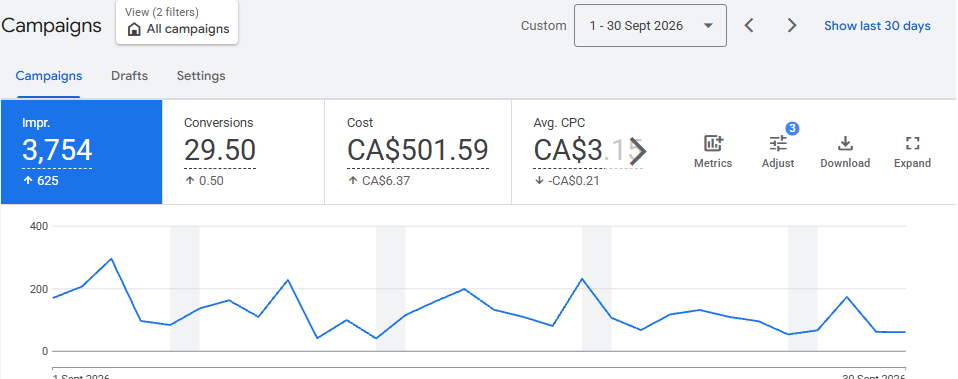
Most Google Ads reports count actions on your website, not inquiries. In September 2026, Koru's account spent $501.59 and recorded 29.5 conversions, at $17 each. Each of those conversions was a visit to the Contact Us page. People also tapped Koru's phone number 37 times, which the report tracks separately.
Both actions are useful signals that the right people are clicking. But someone who opens your contact page might leave without filling in the form. Someone who taps your number might hang up, or might be calling about something else entirely. Neither one is a lead yet.
This matters because a $17 figure sets the wrong expectation. If you believe a lead costs $17, a real lead at $80 looks like a failure. If you believe it costs $80, you can judge the ads properly.
A real custom home lead from Google costs Koru about $83
Koru gets about six leads a month from Google that turn into estimates, on about $500 in spend. That works out to about $83 for each person who wants to sit down and talk about a build. That's the closest thing to a true cost per lead, and it's about five times what the report shows.
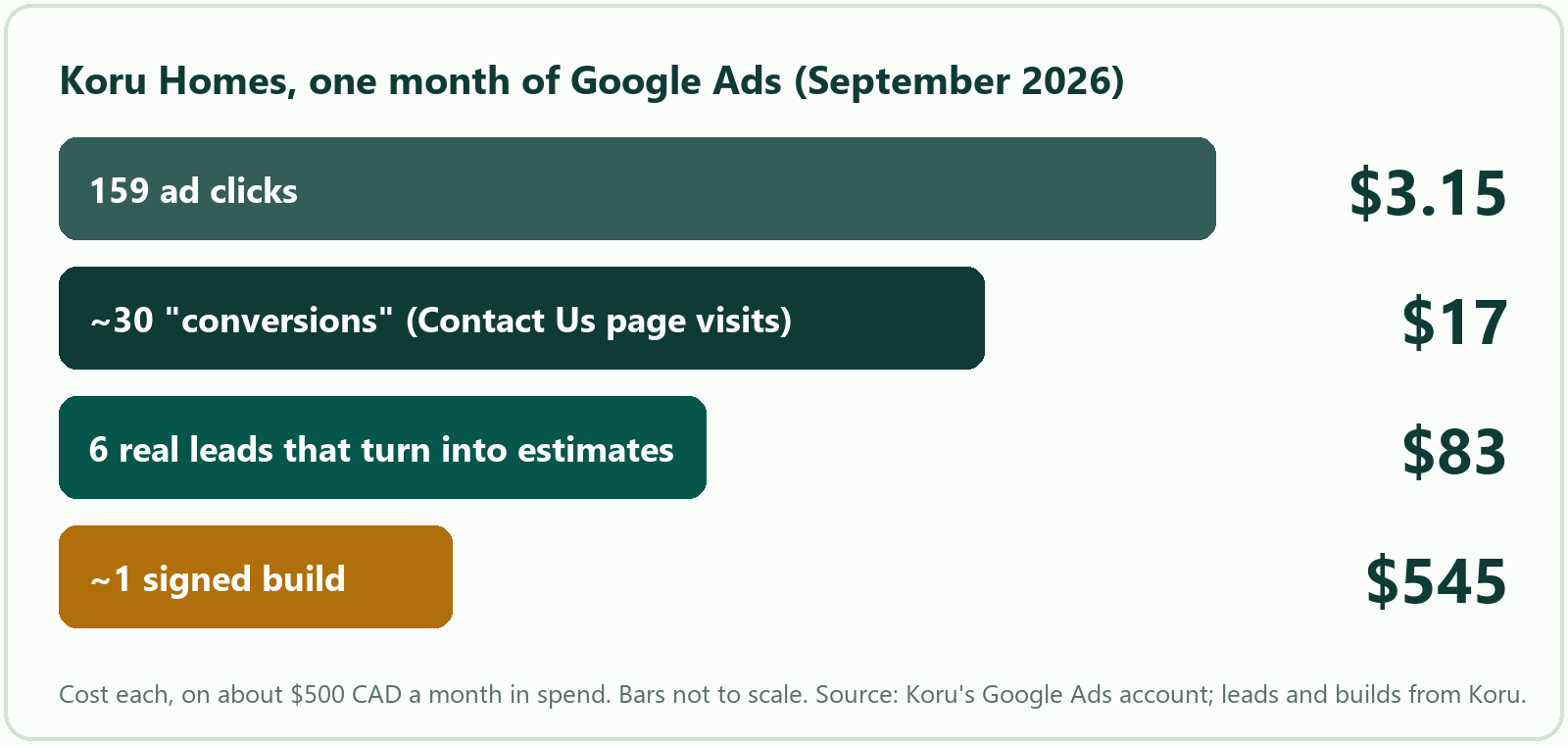
| Stage | Koru Homes, per month | Cost each |
|---|---|---|
| Google Ads spend | about $500 | |
| Ad clicks | 159 | $3.15 |
| "Conversions" on the report (Contact Us page visits) | about 30 | $17 |
| Real leads that turn into estimates | about 6 | about $83 |
| Signed builds | about 1 (about 11 a year) | about $545 |
The top of that table is what Google measures. The bottom is what the builder lives on. Every row in between is a place where a lead can be lost: a missed call, a slow reply, a quote that doesn't land.
The number to watch is cost per signed build
Cost per signed build tells you whether Google Ads is paying for itself. For Koru, it's about $545: $6,000 a year in ads divided by about 11 builds signed from ad leads. With an average build of about $450,000, those 11 projects come to about $5 million a year.
Sayers Contracting in Langley shows the same pattern from a standing start. In its first month with us, Sayers spent $750 on Google Ads. Chad Sayers told us what happened next:
"In our first month with the team, we spent $750 on Google Ads and connected with a few prospective clients who went on to sign projects worth a combined $250,000 a few months later. That's about $333 in signed project value for every $1 spent on ads." Chad Sayers, Sayers Contracting
That's two signed projects for $750, or about $375 each.
| Koru Homes | Sayers Contracting | |
|---|---|---|
| Ad spend | about $500 a month | $750 (first month) |
| Signed from ad leads | about 11 builds a year | 2 projects |
| Value signed | about $5 million a year | $250,000 |
| Cost per signed project | about $545 | about $375 |
A builder doesn't need many wins for these numbers to work. One average Koru build, at about $450,000, is worth 75 times Koru's yearly ad spend. The question to ask your agency is how many signed projects came from ads, and what each one cost.
Search ads work better than Performance Max on a small builder budget
Koru's results got steadier once we paused Performance Max and ran Search campaigns only. Search ads show up when someone types a specific search, like "custom home builders near me." Performance Max is Google's automated campaign type. It shows your ads across Search, YouTube, Maps and other sites, and Google decides where the money goes.
Search gives you control over the exact searches you pay for. In September 2026, "custom home builders near me" brought in 23 of Koru's 30 Contact Us page visits. Across the US, that search gets about 22,200 searches a month, at about US$8.44 a click (DataForSEO keyword data, October 2026). Those are people looking for exactly what Koru builds.
Loose targeting can also bring in calls you never expected. Sayers started getting two to four calls a day from people looking for the Tenancy Board of BC. One caller told Chad she'd searched "tenancy board bc" and his number came up. When we checked the campaign's search terms, variations of "tenancy board bc" were in there. Later came calls for WCB and for a one-bedroom rental, which we traced to Performance Max reaching for searches on its own.
The fix was a list of negative keywords: searches you tell Google never to show your ads for. For the tenancy calls, we added these:
- tenancy board bc
- landlord tenancy branch
- rtb bc
- tenancy
- tenancy act
- residential tenancy
The tenancy calls stopped. In September 2026, Sayers' clicks to call rose from 53 to 76, qualified calls nearly doubled and the cost per conversion went down. If your phone is ringing with calls that have nothing to do with building, ask whoever runs your ads to check the search terms report and add negatives.
Calls and forms need different sales processes, so test which one you count
Decide whether Google should optimize for phone calls or form fills, because each one needs a different way of selling. Google learns from the conversion you tell it matters most, so this choice shapes which buyers it finds.
A phone call means someone wants to talk now. You need to answer, or call back within minutes, and be ready to qualify them on the spot. For builders, speed to lead matters more than almost anything else. In our experience, a buyer who calls around often ends up meeting whichever builder picks up first.
A form gives you time. You can look at their lot, their budget and their timeline before you speak, and walk into the first call prepared. Some builders sell better that way. We test both as the main conversion and look at which one turns into more estimates, not which one produces more clicks.
Send your signed projects back to Google so it finds more buyers like them
Google only knows about the clicks it can see, unless you tell it which leads became signed builds. Every ad click gets a unique ID, called a GCLID. If your CRM or lead form stores that ID, you can send it back to Google Ads when the project signs. Google calls this importing offline conversions.
This is where many agencies stop short. Tying a signed contract back to the ad that started it takes work, so it often doesn't get done. Without it, Google keeps optimizing for page visits and phone taps. With it, Google starts looking for more people like the ones who actually signed.
The best time to spend on ads is when you're already busy
Builders often cut their marketing when they're busy, and that's usually the wrong time to stop. When you're busy, it's often because buyers are out and spending. That's when each ad dollar works hardest.
Chad Sayers is in that position now. He's hiring a pre-construction estimating coordinator because he has seven or eight projects in pre-construction. Custom home buyers also take a long time to decide, often months. The leads you collect while you're busy become the projects that keep you working when things slow down. Spending when everyone is buying adds fuel to a fire that's already burning. Waiting until things are quiet means trying to squeeze work out of a market with fewer buyers in it.
If you want to know what your Google Ads are really costing you per signed build, we'll go through your account and your last year of leads with you. Start with a free audit.